I wanted to bring this post over from my old blog because 1. the info is still very relevant and important. and 2. one never knows what Google is up to and when they will suddenly delete something.
This is a repost from a blog post I made Wednesday, April 10, 2013. I have updated slightly to bring it to 2024.
Unless you are a rebel when it comes to sewing (cutting those patterns out, gasp!), most likely you have used some sort of material to trace your sewing patterns. If you are like me, you want to find one that works well and is economical to boot. So which pattern tracing paper works best? Continue reading for a list of pros and cons of the top 3 tracing paper types most sewists use.
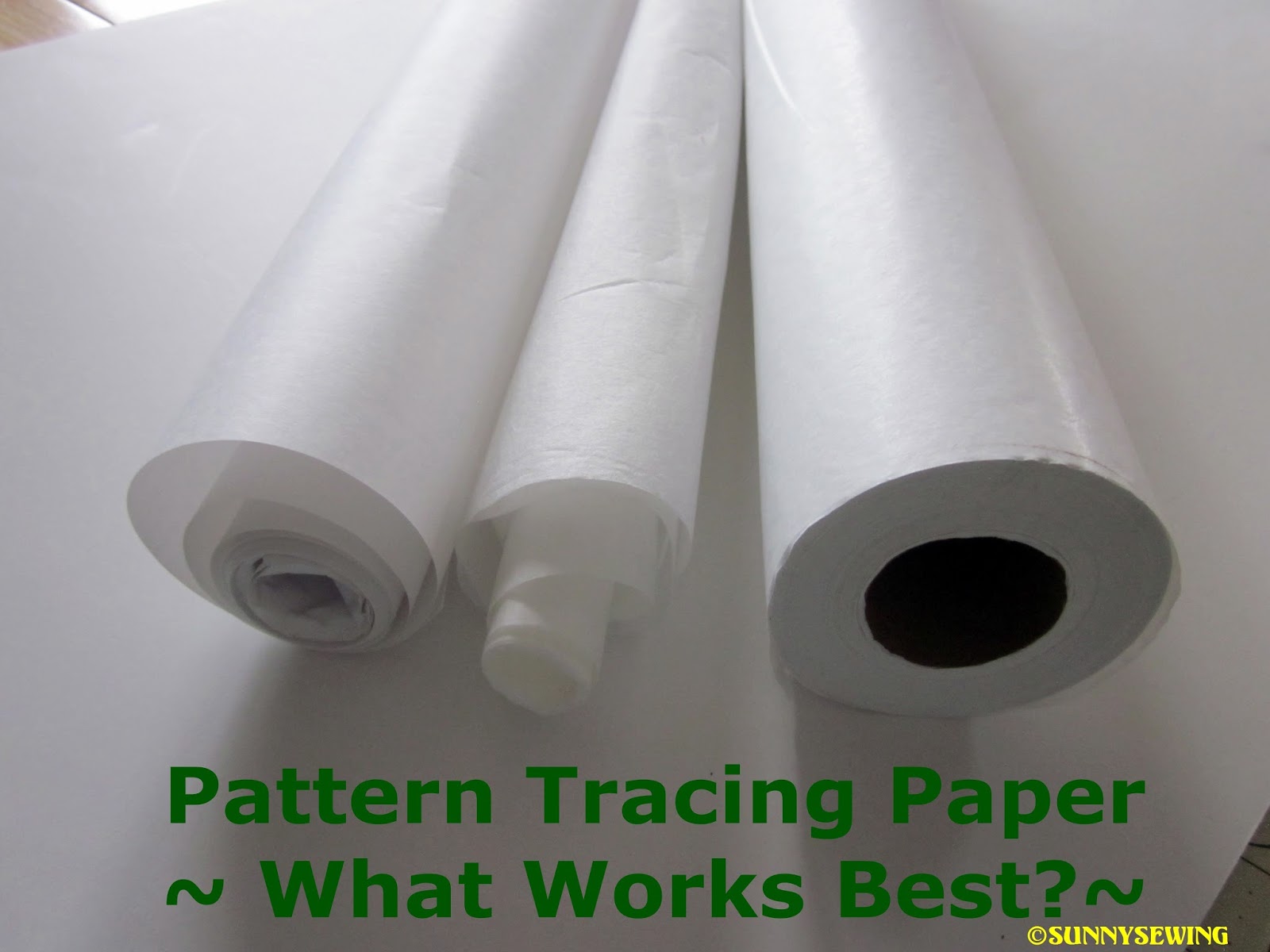
From Left to Right: Freezer Paper, Swedish Tracing Paper, Medical Exam Table Paper
Let’s weigh out the pros and cons. Here is a lineup of all three in a completed traced and cut pattern.
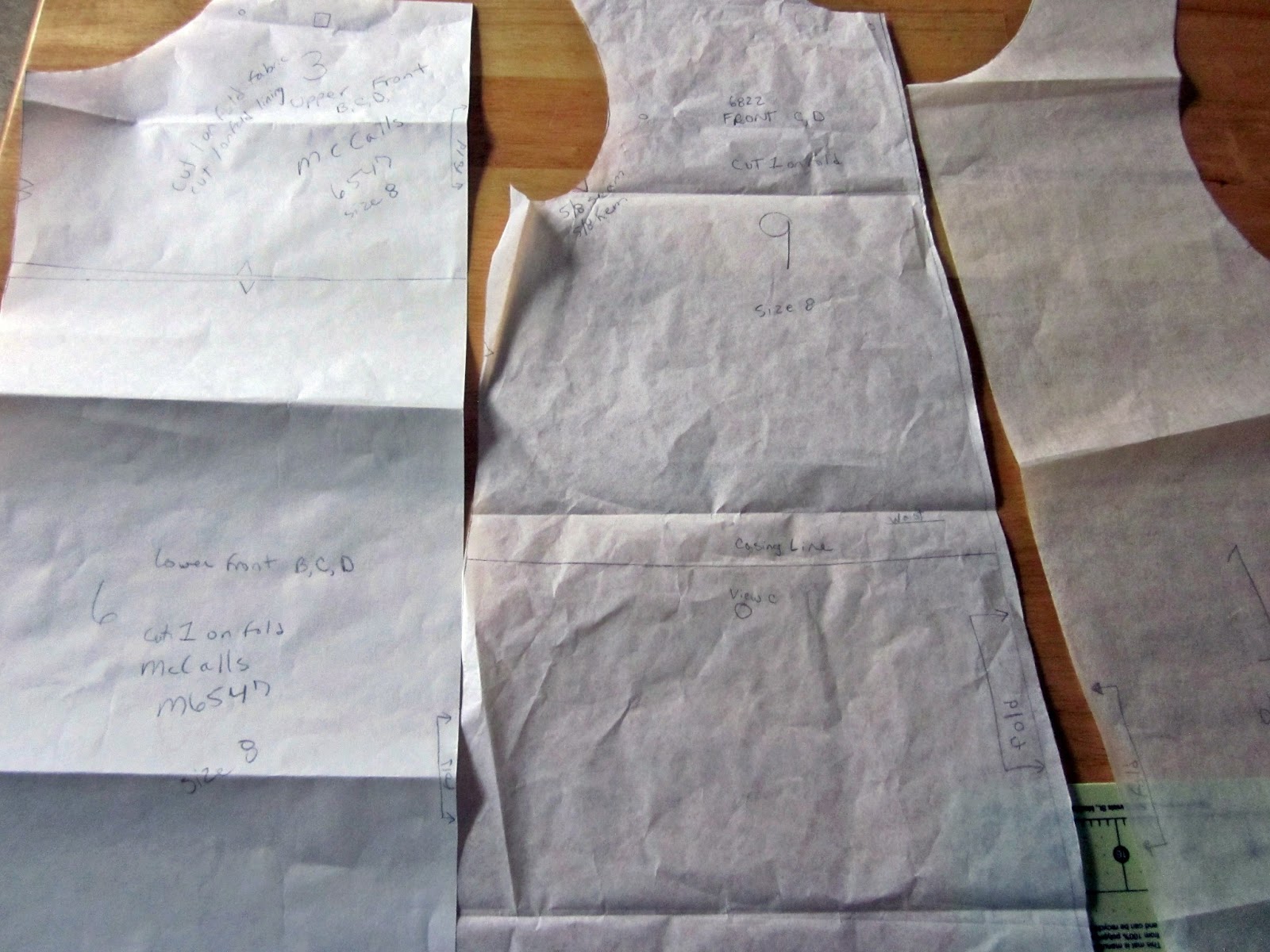
From Left to Right: Freezer Paper, Medical Exam Table Paper, Swedish Tracing Paper
First up: Freezer Paper
Pros:
- Mid expensive $27.99 for the box which is 100 yards x 18 inches wide or about $0.28 a yard
- Can write on it easily
- Pencil erases on it
- Thicker paper – not likely to tear easy
- Can iron it on to slippery fabric to cut it out easier as it sticks right on; once cut you can just peel it off the fabric or even sew with it still attached and remove after.
- Great for Quilting and Applique because of the above stick and cut
Cons:
- Can not iron out the fold lines from storage – ironing will melt it to whatever it touches
- It’s thicker fabric so it may dull scissors
- It is harder to see through to trace patterns as shown below (there is a pattern under there).
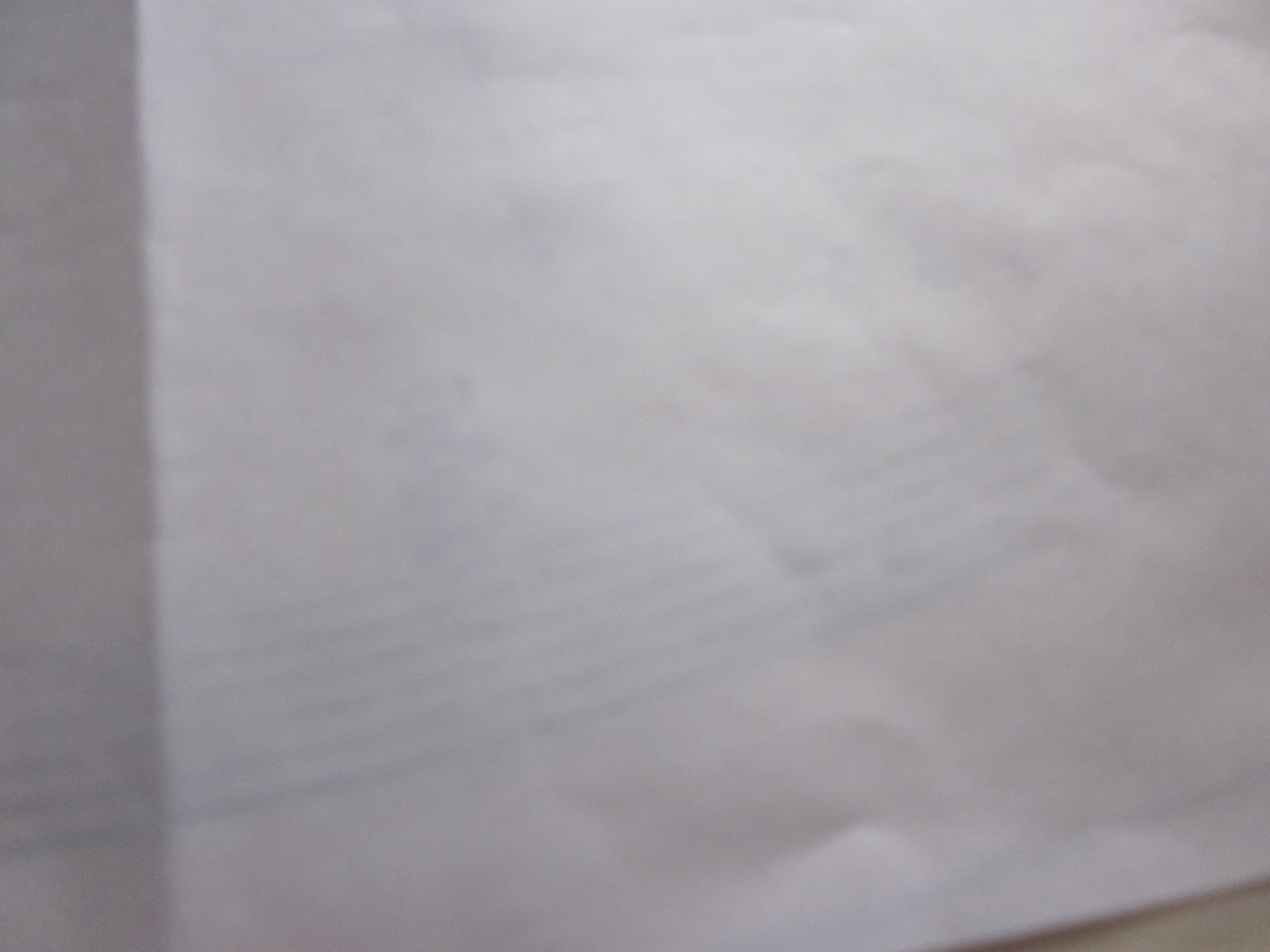
Next up: Swedish Tracing Paper
Pros:
- Can write on it fairly easy with a dull # 2 pencil. A sharp one tears at the paper
- Can iron out the creases from storage
- Doesn’t wrinkle easy
- Very quiet as it is more like fabric than paper
- Thin like interfacing – not likely to tear easy
- Holds nicely to fabrics when you are trying to cut them out
- Since it is more fabric-y you can baste the pattern together to use as a mock-up or muslin before cutting your fabric (Thanks Gail for this tip!)
- Easy to see through to trace patterns (see below)

Cons:
- Mid Expensive $25.99 for the roll which is 10 yards x 29 inches wide or about $0.26 a yard
- Pencil does NOT erase on it
- Bulky to store, not as easy to fold.
Adding to the Swedish Tracing Paper is a Pellon Interfacing much like it.
Pellon 45″ Easy 830 Pattern Non Woven Tracing Material

I will sometimes use this for tried and true patterns that I use a lot.
Why? Because I like that it is thicker than the medical table paper, it sticks sort of to the fabric when you lay it on top (it doesn’t shift).
You can get it at JoAnns for $$45.50 for 25 yds making it $1.82 yd. (yes this is very expensive and that is why I only use it rarely on those patterns I bring out time and time again.
You can also hit it up on sale sometimes making it half price.
I feel this is an option I must mention because its easy to get and behaves the same as the Swedish Tracing paper
Lastly: Medical Exam Paper
Medline Exam Table Paper 12 rolls
Therapist’s Choice Exam Table Paper, 1 Roll
Pros:
-
Very Inexpensive – Box of 12 rolls totals 900 yards of 21″ wide for $49.09 or less than $0.05/yard!
-
If you only want one roll it can be found for 75 yards of 18” wide for $18.99 or $0.25/yard (link above)
-
Can write on easily
-
Pencil erases easy
-
Can iron out the creases from storage (low setting)
-
Easy to pin to fabric when cutting out
-
very easy to store. not bulky at all.
- I will generally pin together these traced pattern pieces to test the fit of a pattern before cutting fabric. It works, but not as smooth as the Swedish Tracing paper.
-
Easy to see through to trace patterns (see below)
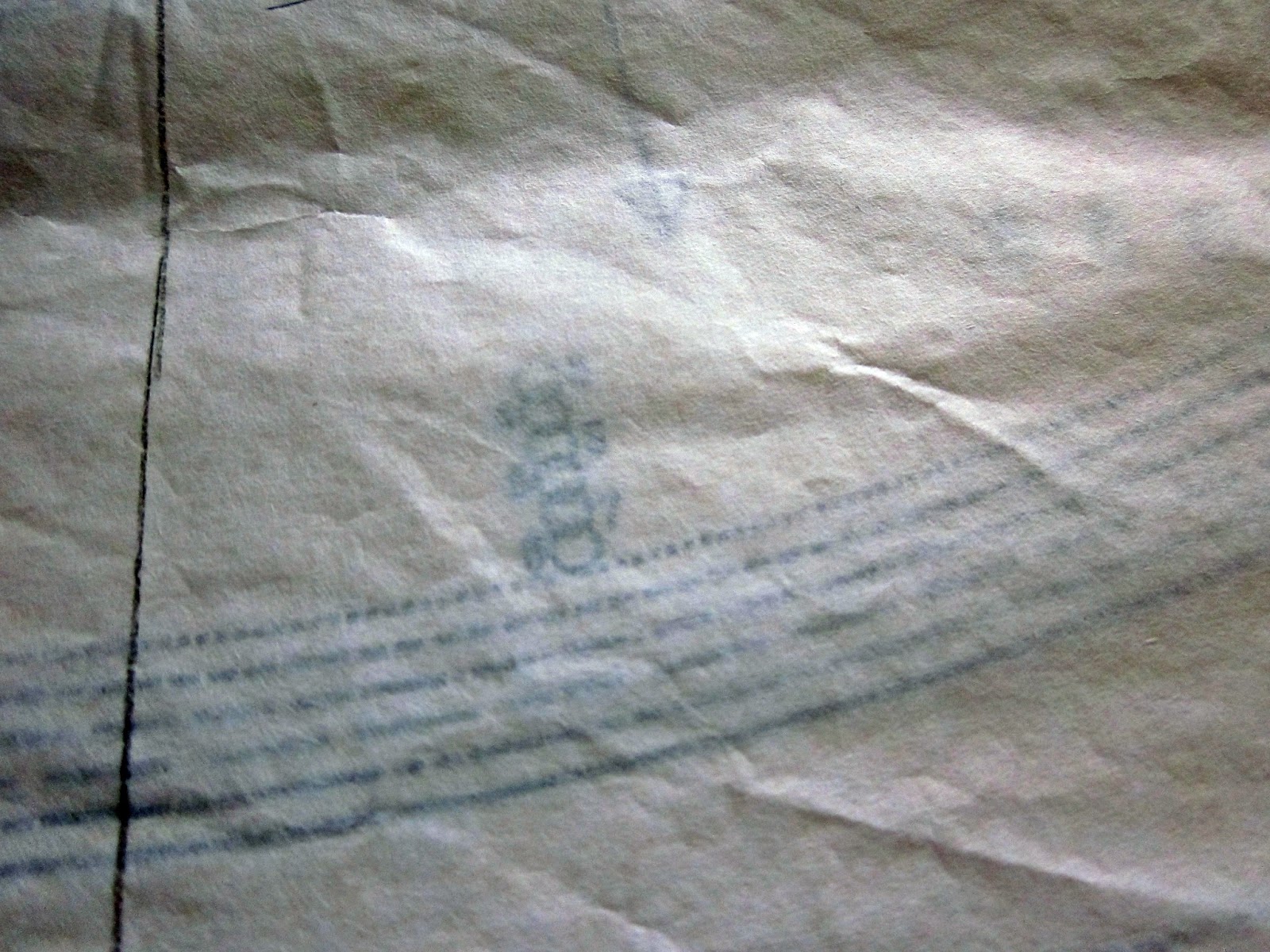
Cons:
-
Wrinkles very easy – but also irons out easy
-
Noisy (it is just like the stuff you sit on at the doctor’s office) crinkle, crinkle
-
Very thin, both a pro and a con – possible to tear easier however I have not had issue with this yet
And there you have it! For me the clear winner is Medline Exam Table Paper
Why?
-
Because you CANNOT beat that price! 5c/yard? come on!! That is amazing.
-
Plus it is perfectly see-through and works well for my needs. I no longer struggle to see those awful pink lines on Burda patterns!
-
I have a box of 12 rolls/900 yards that will probably last me a lifetime!
-
They fold and store away super easy.
-
The wrinkles iron out super fast
-
I can do all my alterations and changes and not worry about wasting paper and money because its only 5c/yard!
I just cannot justify the cost of always using Swedish Tracing Paper anymore. Plus, I won’t run out now in the middle of a project! The medical table paper is slightly more thick than the Big 4 pattern tissue paper to give you an idea of what it is like.
*note: it is so easy to trace Burda and Ottobre patterns onto the medical paper. It is nice and easy to see the colored pattern lines through the paper.
So what are your thoughts? What do you use to trace your patterns?
Happy Sewing!
Kristin
Discover more from SunnySewing by Kristin
Subscribe to get the latest posts sent to your email.
 SunnySewing by Kristin

You left off my favourite: Simplicity Pre-Cut 100cm x 10m Trace & Toile Sew On Interfacing, normally around AU$2/m.
It has the advantage of being stronger than tracing paper, and at a metre wide fits even large pattern pieces. When you take the width into account, it is also half or less the price.
Because it is a non woven interfacing, you can pin and drape it for tissue fitting. More often than not, saving me the time and fabric of having to make a muslin.
LikeLiked by 1 person
Thanks Karey, I can see where that would come in handy. I’m over the water in the US, we don’t have spotlight here. but maybe the simplicity precut is around somewhere.
LikeLiked by 1 person
Any cheap non woven sew-in interfacing would work.
LikeLike
As far as I can see, this is not available in UK. But it looks a lot like Swedish Tracing Paper; do you know how they compare?
LikeLiked by 1 person
Is Swedish tracing paper interfacing or transparent paper. Unless its interfacing its not the same.
LikeLike
it feels like an interfacing
LikeLiked by 1 person
After looking at comments on the original post, one thing I didn’t see mentioned – you can sew Swedish tracing paper to test fit a garment. You can sew the paper too, but it’s prone to tearing while checking the fit.
Very nice summary of the common options.
LikeLiked by 1 person
Thats a great point Gail! I will add it to the list
LikeLiked by 1 person
Great blog post, thank you. I have a few things to add to the discussion:
I often buy a catering roll of greaseproof or baking paper. Its inexpensive although it can be a bit opaque. It takes pencil well, but not felt pen, and you can iron out creases.
Proper tracing paper on the roll is also useful and comes in wider widths. This will take felt pen as well as pencil and is properly transparent. It tends to be a bit expensive, but I occasionally pick up a bargain on Amazon.
Finally, you didn’t mention that Swedish Tracing Paper is a whole meter wide, which is really helpful for larger pattern pieces. Also, it is easy to cut out the pieces using a cutting wheel, which I prefer to scissors. I find I use it more and more.
LikeLiked by 1 person
thanks Odette! I have a separate Olfa rotary cutter for paper and then my one for fabric. so I cut the traced medical exam paper quickly with my paper rotary cutter.
Good point on the Swedish paper being a yard wide. I just tape more paper if I need it wider, but most pattern pieces don’t usually get that large.
I love your added information though! thanks
LikeLiked by 1 person